%20-%20Hi%20Res%201_edited.png)
%20-%20Hi%20Res%201.png)
15 Airbnb Algorithm Tips That Actually Move Rankings in 2026

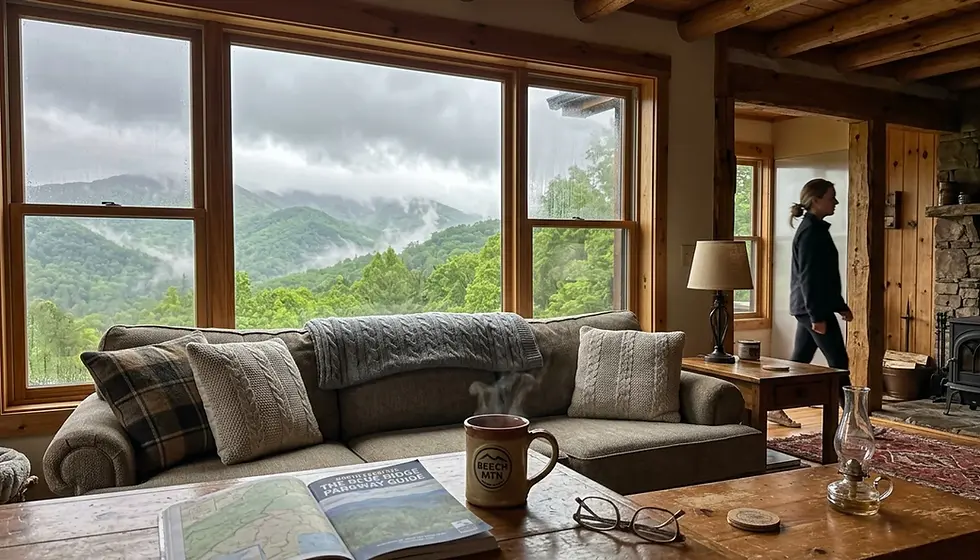
Airbnb's search algorithm ranks listings using three confirmed factors: total price compared against similar listings, quality signals like photos and reviews, and popularity measured through booking behavior. The most effective airbnb algorithm tips for 2026 come directly from Airbnb's own Resource Center rather than guesswork, and they center on price competitiveness, calendar openness, response speed, and review volume. At 3 Putt Properties, LLC, we manage listings across Beech Mountain and the wider North Carolina High Country, and the pattern we see most often is owners chasing minor photo tweaks while ignoring the bigger levers: price positioning and calendar restrictions.
Key Takeaways
Airbnb's official guidance names four core ranking inputs: total price (including fees), listing quality, popularity, and location relevance, according to Airbnb's Help Center and Resource Center.
Total price comparisons happen against similar listings in the same area, so a high nightly rate offset by steep cleaning fees can hurt ranking even if the advertised rate looks competitive.
Properties using dynamic pricing saw a 36.3% average increase in gross revenue per unit across 541 listings in 34 countries, according to a 2026 Your.Rentals/PriceLabs study.
Boone, North Carolina listings average a $346 nightly rate across 615 active Airbnb properties, according to 2026 AirROI market data, illustrating how local comparables shape what "competitive pricing" actually means.
Response rate, acceptance rate, and calendar availability are listed by Airbnb as controllable factors, giving hosts direct influence over a meaningful share of their ranking.
No single search result reflects a listing's true rank; results shift by guest, dates, destination, and filters, so a screenshot from one search is not a reliable diagnostic.
If you manage a mountain cabin near Beech Mountain Resort or a coastal home on Topsail Island, you have probably searched for your own listing and wondered why it landed where it did. That single search result rarely tells the whole story. Airbnb's algorithm reshuffles results for every guest, date range, and filter combination, so the "ranking" most hosts obsess over is really just one snapshot among thousands.
This guide separates what Airbnb has actually confirmed from what third-party blogs claim without evidence. It also covers a diagnostic approach most articles skip: testing your own listing's performance using Airbnb's search tools rather than relying on generic checklists. As of 2026, the fundamentals have not changed dramatically, but the competitive bar has risen as more High Country and coastal NC properties enter the market.
What Is Airbnb's Algorithm Designed to Optimize?
Airbnb's algorithm is a matching system designed to connect guest search criteria with the listings most likely to result in a completed, well-reviewed booking. According to Airbnb's own Help Center documentation, the system weighs quality, popularity, price, and location for every individual search, not as a fixed universal score.
Airbnb states that quality is shaped by photos, guest reviews, and video content, as well as how a host communicates and handles cancellations. Popularity reflects how often guests book a listing, view its page, or save it to a wish list. Price is evaluated as a pre-tax total, including cleaning fees and any discounts, compared against similar nearby listings.
Two identical cabins in Beech Mountain, NC could rank differently for the same search dates simply because one has a lower total price after fees or a faster average response time. Chasing a single "algorithm hack" rarely works here. The system reacts to dozens of interacting signals at once, and Airbnb has confirmed a design goal of matching supply to demand efficiently, not rewarding any one tactic in isolation.
What Is the 80/20 Rule in Airbnb?
The so-called "80/20 rule" is not an official Airbnb ranking formula. It is a third-party shorthand some hosting blogs use to describe the idea that a small share of listing improvements, mainly pricing and photos, drive a large share of booking performance. Airbnb itself has never published a rule by this name.
You will see this phrase repeated across host forums and blog posts, often applied loosely to mean "focus on the highest-impact 20% of changes." That is reasonable general advice, but treating it as a documented Airbnb algorithm mechanism is inaccurate. If a resource presents it as an official platform formula, be skeptical.
What Airbnb has confirmed instead is more specific: total price, quality signals like photos and reviews, and popularity metrics like click-through and booking rate are the named factors. Rather than hunting for a numbered rule, focus your energy on the confirmed levers: your total price versus comparable Boone or Blowing Rock listings, your photo set, and your response behavior.
11 Airbnb Algorithm Tips to 3X Bookings
Is There a Numbered Ranking Formula Hosts Should Follow?
No verified numbered ranking formula exists in Airbnb's published documentation. Treat any numbered "rule" you encounter online with caution unless it traces back to Airbnb's own Help Center or Resource Center pages.
Instead of searching for hidden numeric thresholds, look at what Airbnb has actually stated matters: response rate, acceptance rate, cancellation history, and review scores across six categories: cleanliness, accuracy, check-in, communication, location, and value, as outlined by hosting platform Hostfully. These are documented, measurable inputs you can act on.
If you manage properties across multiple markets, whether that is a ski cabin near Sugar Mountain or a beach house in Surf City, build a checklist around confirmed factors rather than memorizing a numeric rule that may not exist. We cover that checklist later in this guide.
What Is the 25 Rule on Airbnb?
Similar to the 80/20 claims above, we found no official Airbnb source confirming a "25 rule." Some hosts use the number 25 loosely to describe minimum photo counts or pricing percentage benchmarks, but none of these usages trace back to a single documented Airbnb standard.
What we can say with confidence: Airbnb recommends comprehensive, high-quality photo sets and specific, detailed descriptions so guests know what to expect. Airbnb also states that more open calendar dates increase the likelihood a listing matches guest search criteria. Neither of these is tied to a specific number like 25.
If you encounter a blog post presenting a precise numeric "rule" without linking to Airbnb's own Resource Center or Help Center, treat it as a hypothesis, not policy. Our approach at 3 Putt Properties, LLC has always been to test changes on our own managed listings and measure real outcomes rather than chase unverified formulas circulating online.
How to Beat the Airbnb Algorithm?
Beating the Airbnb algorithm means consistently outperforming comparable listings on the factors Airbnb has confirmed it measures: total price, listing quality, popularity signals, and availability flexibility. It comes down to pricing discipline, complete listing content, and responsive hosting behavior sustained over months.
First, price matters more than most hosts assume. Airbnb compares your total price, not just your nightly rate, against similar listings nearby. A cabin advertised at $250 a night with a $200 cleaning fee can rank worse than a $280 nightly listing with a $75 fee, because guests filter and compare total trip cost. Review your cleaning fee relative to length of stay; a flat high fee disproportionately hurts one and two-night bookings.
Second, open your calendar further out. Airbnb states directly that more available dates increase the odds a listing matches a guest's search. Blocking large chunks of your calendar for personal use or indecision reduces your visibility footprint, even if your listing itself is strong.
Third, respond fast and accept requests. Airbnb recommends responding to reservation requests within 24 hours and avoiding frequent declines, since acceptance behavior feeds directly into your performance metrics. Instant Book, which Airbnb notes helps listings surface for guests who filter specifically for that feature, reduces friction between a guest's search and a completed reservation.
Fourth, invest in reviews deliberately. A listing with 150 reviews averaging 4.9 stars will consistently outperform one with 12 reviews averaging 4.6 stars in guest trust and booking conversion, according to Hostfully's analysis of ranking behavior. Prompting satisfied guests to leave a review after checkout, without being pushy about it, compounds over a full season.

How Does Total Price Compare to Similar Listings Affect Ranking?
Total price comparison is the process Airbnb uses to weigh your listing's pre-tax cost, including cleaning fees and any applied discounts, against other listings serving the same search. This is one of the few ranking mechanics Airbnb has explicitly confirmed in its Resource Center, and hosts who only look at their nightly rate frequently misread it.
In a market like Boone, North Carolina, where the average nightly rate sits around $346 across 615 active listings according to 2026 AirROI data, a host pricing at $310 might assume they are competitively positioned. But if their cleaning fee runs high relative to typical stay length, the total trip cost guests see at checkout could exceed comparable listings, hurting search placement for shorter bookings.
Dynamic pricing tools address this by adjusting nightly rates in response to demand, local events, and competitor movement, rather than leaving your rate static for months. A 2026 study covering 541 Airbnb listings across 34 countries found that properties adopting dynamic pricing saw a 36.3% average increase in gross revenue per unit and a 37.3% increase in nights booked, alongside a slight 0.7% decrease in average daily rate. Small rate flexibility drove meaningfully more bookings without raising nightly prices much at all.
This is exactly the kind of adjustment 3 Putt Properties, LLC builds into our revenue management approach, layering ongoing market analysis on top of automated pricing software so seasonal shifts, like Beech Mountain's December through February peak, get priced correctly rather than left on autopilot.
How Do Listing Quality Signals Influence Search Placement?
Listing quality refers to the combination of photos, guest reviews, description accuracy, and communication history that Airbnb uses to judge how well a listing matches guest expectations. Airbnb's Help Center names photos, videos, guest reviews, communications, customer service, cancellation history, and amenities as inputs feeding this quality score.
High-quality photography is one of the highest-leverage, lowest-cost improvements available to most hosts. Airbnb states that professional-grade photos may improve prominence within a search category and increase guest attention once a listing appears. For a High Country cabin, that means showing the hot tub with mountain views and the kitchen in natural light, not phone snapshots taken at dusk.
Descriptions matter almost as much as photos. Airbnb recommends describing unique characteristics with specific detail so guests know what to expect, rather than generic marketing language. A listing description that says "cozy mountain retreat" tells a guest nothing; one that mentions a private sledding hill, flat parking (a rarity in the mountains), or a transferable golf club membership gives a guest a concrete reason to click.
Amenities also factor into quality. Airbnb specifically recommends high-speed Wi-Fi, self check-in, and free parking as amenities guests actively search for. If your listing description or design consulting hasn't addressed these, it is worth a review; this is the kind of gap our interior design and staging guidance is built to close for owners.
How Do Response Rate, Acceptance Rate, and Cancellations Affect Ranking?
Response rate, acceptance rate, and cancellation history are host-behavior metrics that Airbnb tracks and factors into a listing's overall performance and visibility. These metrics reflect how reliably a host engages with guest inquiries and honors confirmed bookings, and Airbnb has confirmed these behaviors influence search results.
Airbnb recommends responding to reservation requests within 24 hours. In practice, guests searching for available dates in a competitive market, like ski season near Beech Mountain Resort, often book with whichever host replies fastest, since slow responses risk losing the guest to a competing listing entirely. Aim for a 90% or higher response and acceptance rate; that threshold isn't an Airbnb-published number, but it's a reasonable benchmark based on what fast-replying hosts typically achieve.
Host-initiated cancellations carry more weight against a listing than guest-initiated ones. Cancelling a confirmed booking, even for legitimate reasons like an unexpected maintenance issue, disrupts a guest's plans and signals unreliability to the algorithm and to future guests reading your review history.
Instant Book also plays a role here. Airbnb states that Instant Book helps listings surface when guests specifically filter for it, and it can speed up your overall response performance since there is no manual approval delay. For owners managing properties remotely, whether that is a Wilmington condo or a Manlius, NY home near Syracuse University, Instant Book paired with a reliable co-host reduces the risk of a slow response tanking your metrics.
How Does Calendar Availability and Minimum Stay Affect Airbnb Search Results?
Calendar availability refers to how many open dates a listing shows within a searchable window, and Airbnb has confirmed that more open dates increase the odds a listing matches a guest's specific search criteria. This is a controllable factor many owners underestimate, particularly those who block long stretches for personal use or leave stale, unconfirmed dates open.
Minimum and maximum stay restrictions work against you here too. Airbnb recommends reducing unnecessary booking restrictions, since a guest searching for a three-night weekend will simply skip past a listing requiring a five-night minimum, regardless of how strong the listing otherwise is. If your High Country cabin has historically required a full-week minimum during ski season, testing a shorter minimum on shoulder-season weeks like April, May, and September, identified as low-demand months in 2026 AirROI seasonal data, can capture bookings you are currently missing.
Flexibility around trip length also matters more broadly. Airbnb's Help Center notes that flexible availability increases the likelihood a home matches a guest's actual travel plans, which vary between a weekend ski trip and a week-long family reunion. Reviewing your restrictions season by season, rather than setting one rule year-round, is a simple audit most self-managing hosts never run.

Do Blocked Nights Hurt Airbnb SEO?
Yes, blocking nights on your calendar reduces the number of guest searches your listing can match, which lowers your overall visibility across Airbnb search results. Because Airbnb explicitly ties open availability to search matching, every blocked night is effectively a missed opportunity to appear in front of a guest whose dates align with that window.
This does not mean you should never block dates. Personal use, planned maintenance, and off-season closures are legitimate reasons to restrict availability. The issue arises when hosts block dates indefinitely out of indecision, or leave a calendar unsynced across multiple platforms, creating stale-looking availability that fails to match real guest demand or reflect an accurate picture of when the property is actually bookable.
For owners running listings across Airbnb, VRBO, and direct booking channels simultaneously, calendar sync failures are a common and avoidable cause of this problem. A double-booked or inconsistently blocked calendar damages both guest trust and algorithmic visibility at the same time. Professional channel management closes this exact operational gap, keeping pricing, availability, and guest messaging synchronized across every platform your property lists on.
Airbnb vs Its Competitors: What Owners Should Know
Airbnb's largest direct competitor in the short-term rental space is Vrbo, followed by Booking.com's vacation rental segment, both of which operate their own separate ranking and search systems. Understanding how these platforms differ matters for owners deciding where to list, since optimizing for one platform's algorithm does not automatically translate to another.
Vrbo tends to attract a guest base skewed toward whole-home family and group travel, which aligns naturally with larger High Country cabins sleeping ten or more guests. Airbnb's guest base spans solo business travelers booking a Syracuse loft and multi-generational families booking a Beech Mountain lodge. Booking.com brings strong international traffic and hotel-style search behavior, which can work well for smaller condo-style units.
Property management software platforms like NARPM members and STR-focused tools increasingly recommend multi-platform distribution rather than relying on a single channel. AirDNA, which tracks roughly 10 million listings across Airbnb, Vrbo, and Booking.com in 120,000 markets globally as of 2026, reports that supply has grown across all three platforms simultaneously, meaning single-platform hosts are competing against a larger pool of options every year.
Rather than treating this as an either-or decision, most professionally managed portfolios list across multiple channels and let synchronized channel management handle the operational complexity, an approach we apply across our own managed cabins in Beech Mountain and beach houses along Topsail Island.
Ranking Factor | Airbnb Confirmed Guidance | Practical Host Action |
Total Price | Compares pre-tax total, including fees, against similar listings | Audit cleaning fees relative to average stay length; consider dynamic pricing |
Listing Quality | Photos, reviews, descriptions, amenities, communication history | Invest in professional photography and detailed, specific descriptions |
Popularity | Booking frequency, page views, wish-list saves | Track click-through and conversion, not just impressions |
Availability | More open dates increase match likelihood | Reduce unnecessary minimum-stay restrictions by season |
Responsiveness | 24-hour response window recommended; frequent declines discouraged | Use Instant Book or a co-host to maintain fast response times |
How Can You Diagnose Your Own Listing's Ranking Performance?
Diagnosing your listing's ranking performance means testing search results systematically across different dates, guest counts, and filters rather than judging your position from a single search. Because Airbnb personalizes results per guest and per search, one screenshot showing your cabin on page two tells you almost nothing in isolation.
Start by running the same search across three or four different date ranges, including both peak weeks and shoulder-season dates. Note where your listing appears relative to comparable properties in your specific market, whether that is Beech Mountain, Boone, or Blowing Rock. If your ranking is consistently strong during peak dates but weak during shoulder season, that points to a pricing or minimum-stay issue rather than a listing quality problem.
Next, check your listing from an incognito browser window using a guest-count and date combination typical of your ideal booking, then compare your total displayed price against three to five similar nearby listings. This tells you directly whether your total price, not just your nightly rate, is competitive for that specific search.
Finally, track your own performance metrics over time inside your host dashboard: impressions, clicks, conversion rate, and message response time. Run a 30-day test changing one variable at a time, your cover photo, your minimum stay, or your Instant Book setting, so you get a clean read on what moved the needle rather than layering five changes at once and guessing which one worked.
What Trade-Offs Should You Understand Before Making Changes?
Every algorithm optimization involves a trade-off, and understanding these before you make changes prevents operational headaches down the line. Opening more calendar dates increases visibility, but it can also create scheduling strain if your cleaning team is not staffed for same-day turnovers between back-to-back bookings.
Instant Book reduces response-time friction and can improve your overall metrics, but it requires accurate house rules, guest requirements, and calendar synchronization set up in advance. Without that groundwork, Instant Book can lead to bookings that do not match your property's actual capacity or house rules, creating guest friction after the fact rather than before.
Lowering minimum stays captures more shoulder-season bookings, but it also increases your total number of turnovers per month, which raises cleaning costs and wear on the property. For a mountain cabin with narrow, winding access roads, more frequent turnovers also mean more trips up and down in potentially icy winter conditions, a real operational cost that a pricing spreadsheet alone will not show you.
Common mistakes we see across owner-managed listings: treating a single search screenshot as proof of ranking, ignoring cleaning fees while chasing nightly rate, and setting minimum stays once and never revisiting them by season. Each of these is fixable if you test changes deliberately rather than reacting to a bad week.
Frequently Asked Questions
Who is Airbnb's biggest competitor?
Vrbo is generally considered Airbnb's most direct competitor in whole-home short-term rentals, with Booking.com's vacation rental segment as a significant secondary player. Vrbo tends to skew toward family and group travel, while Airbnb's guest base spans a broader mix of trip types, from business travel to multi-generational reunions.
What does Airbnb stand for?
Airbnb originated from "Air Bed and Breakfast," reflecting the company's earliest model of hosts renting air mattresses in their homes to conference attendees. The name has stayed even as the platform expanded far beyond that original concept into whole-home and luxury rentals.
How long does it take a new Airbnb listing to start ranking consistently?
New listings typically need several completed bookings and guest reviews before ranking stabilizes, since Airbnb's quality and popularity signals both depend on accumulated guest interaction data. A brand-new listing with zero reviews competes against established properties with review histories, so pricing slightly below market early on and prioritizing fast response times can help close that gap.
Is Instant Book worth turning on for a High Country cabin?
For most professionally managed properties, yes, since Airbnb confirms Instant Book helps listings surface for guests filtering specifically for that feature and removes manual approval delay from your response metrics. It works best when your house rules, guest requirements, and calendar accuracy are already dialed in, since there is no review step before a guest books.
Do blocked nights actually hurt Airbnb SEO, or is that a myth?
It is not a myth; Airbnb's own guidance ties open calendar availability directly to how often a listing matches guest searches. Blocking dates for legitimate reasons like maintenance or personal use is fine, but leaving large unexplained gaps blocked reduces the number of searches your listing can appear in.
How much does dynamic pricing actually improve revenue compared to a fixed nightly rate?
A 2026 study of 541 Airbnb listings across 34 countries found dynamic pricing adopters saw a 36.3% average increase in gross revenue per unit and a 37.3% increase in nights booked, with only a slight 0.7% decrease in average daily rate. That data suggests the revenue gain comes primarily from increased occupancy rather than higher nightly prices.
Should I hire a property manager to handle Airbnb algorithm optimization, or can I do it myself?
Self-managing hosts can apply the confirmed factors covered in this guide, particularly pricing audits and calendar flexibility. Where owners tend to fall behind is sustaining fast 24-hour response times and testing pricing changes methodically over a full season, which is where a dedicated management team's ongoing attention tends to outperform occasional owner check-ins.
Getting Your Listing's Fundamentals Right in 2026
Airbnb's algorithm rewards competitive total pricing, complete and accurate listing content, fast host responsiveness, and open calendar availability, none of which requires chasing unverified numeric "rules" circulating online. The confirmed factors, price, quality, popularity, and location relevance, give you a real, testable framework rather than guesswork.
Start with a 30-day audit: check your total price against three comparable listings in your market, review your minimum stay restrictions by season, and confirm your response time sits under 24 hours. These three changes alone address the majority of controllable ranking factors Airbnb has publicly confirmed.
As competition across the North Carolina High Country and coastal markets continues growing into 2026, the gap between owners who test and adjust methodically and those who set a listing once and walk away will only widen. If coordinating pricing audits, calendar strategy, and guest response times across your property feels like more than you have time for, that is exactly the gap Get started with 3 Putt Properties, LLC was built to close for owners managing cabins and beach houses across Banner Elk, Beech Mountain, Boone, Blowing Rock, Topsail Island, Surf City, and Wrightsville Beach.

Whether you are weighing whether your current pricing strategy is leaving money on the table or you want a second opinion on your listing's photos and description, our team runs revenue analyses for owners considering a switch to professional management. Reach out through our blog for more owner-focused guides, or contact us directly to talk through your specific property.
Written by Eric McCarty, Found, CEO at 3 Putt Properties, LLC
Content powered by inkSTR.co


Comments